






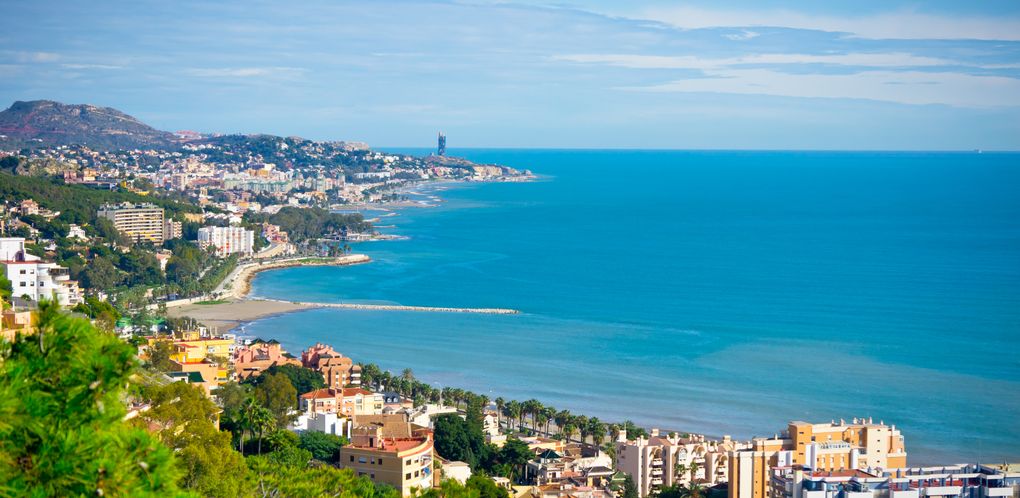
What to do in Málaga: the complete guide to discovering the city
Málaga is much more than sun and beach. It is a Mediterranean city where you can visit a Moorish fortress in the morning, eat on a terrace in the historic centre, discover Picasso's work in the afternoon and end the day with dinner accompanied by live flamenco.
With more than 3,000 years of history, Málaga has been shaped by Phoenicians, Romans and Moors. That past can still be seen as you walk its streets, but today it blends with a modern city full of museums, restaurants, markets, beaches, terraces and a lively cultural scene.
Planning a trip to Málaga? In this guide you will find the must-see places, activities worth doing, food recommendations and some local tips to make the most of your stay.
What to see and do in Málaga?
If you are visiting Málaga for the first time, these are some of the places that should be on your list.
1. Visit the Alcazaba of Málaga
The Alcazaba is one of Málaga's most iconic monuments and one of the best-preserved examples of Moorish architecture in the city.
Originally built during the Moorish period, its elevated position served a defensive purpose and allowed control over both the city and its port.
Today you can explore its walls, courtyards and gardens while enjoying different views of central Málaga.
Its location is also perfect for combining the visit with other nearby monuments.
Tip: visit the Alcazaba, the Roman Theatre and Gibralfaro Castle together if you have enough time.
2. Discover the Roman Theatre
At the foot of the Alcazaba you will find one of the great remnants of Málaga's Roman past: the Roman Theatre.
Its location makes the mix of cultures that characterises Málaga especially visible. Within a few metres you come across Roman remains and Moorish buildings surrounded by a completely modern city.
It is an easy stop to include as you explore the historic centre on foot.
3. Climb up to Gibralfaro Castle
If you are looking for one of the best panoramic views of Málaga, head up to Gibralfaro Castle.
From this high point you can see the port, the La Malagueta bullring and a large part of the Málaga coastline.
You can walk up, but bear in mind that the climb is quite steep. If it is very hot or you would rather save energy for exploring the city, you can also use public transport.
Sunset is one of the most beautiful times to enjoy the views.
4. Stroll along Calle Larios
Calle Marqués de Larios, known simply as Calle Larios, is one of the focal points of Málaga.
This pedestrian street connects the Alameda Principal area with Plaza de la Constitución and is an excellent starting point for discovering the historic centre.
Around it you will find shops, restaurants, cafés and many little streets that are worth wandering without too much planning.
Because Málaga is also discovered by getting lost in its streets.
5. Visit Málaga Cathedral
Right in the historic centre stands the Cathedral of the Incarnation.
One of its best-known features is that one of its towers was never finished. That is why the people of Málaga affectionately call it “La Manquita” (the one-armed lady).
Its mix of architectural styles reflects the different periods in which it was built.
Even if you don't go inside, it is worth walking over to Plaza del Obispo to admire its façade.
6. Get to know the Museo Picasso Málaga
Pablo Picasso was born in Málaga in 1881, and his connection with the city is still very present.
The Museo Picasso Málaga houses an important collection dedicated to the artist and is located in the Palacio de Buenavista, right in the historic centre.
Art lovers can also visit Plaza de la Merced, where Picasso's birthplace is located.
7. Stroll through Plaza de la Merced
Plaza de la Merced is one of the best-known and liveliest places in central Málaga.
Besides its link with Picasso, it is surrounded by terraces and easily connects with some of the city's main cultural sights.
From here you can walk to the Teatro Cervantes or the Alcazaba, or keep exploring the little streets of the historic centre.
8. Get to know the Teatro Cervantes
The Teatro Cervantes is one of Málaga's great cultural landmarks.
Opened in the 19th century, it is still one of the city's main venues for theatre, music and other cultural events.
The area around the theatre is also worth a visit. Here you will find a slightly quieter Málaga than the main shopping streets, yet still just a few minutes' walk from the major monuments.
Right next to the Teatro Cervantes you will also find Restaurante Vino Mío, where food, art and live flamenco come together in one place.
9. Enjoy live flamenco in Málaga
If you want to get to know Andalusia beyond its monuments, set aside an evening for flamenco.
Flamenco is part of Andalusia's cultural identity, and experiencing it live is completely different from hearing it or watching it on a screen.
At Restaurante Vino Mío, on Plaza Jerónimo Cuervo next to the Teatro Cervantes, you can combine dinner with an intimate live flamenco show.
Unlike the big shows, the artists perform very close to the tables, creating a particularly intimate experience.
Guitar, singing and dance accompany a Mediterranean and Andalusian menu.
It is a great way to end a day exploring Málaga: sit down, have a relaxed dinner and enjoy one of the most important cultural expressions of Andalusia.
Recommendation: book in advance, especially at weekends and during holidays.
10. Visit the Mercado Central de Atarazanas
To discover everyday Málaga, it is worth visiting the Mercado Central de Atarazanas.
Fruit, vegetables, fish, meat, olives and other Mediterranean produce fill the stalls.
Beyond shopping, visiting a traditional market helps you understand a city's food culture much better.
The building itself also deserves attention for its striking monumental gate and large stained-glass window.
11. Walk along Muelle Uno and the Palmeral de las Sorpresas
From the historic centre you can easily walk to the port.
The Palmeral de las Sorpresas leads to Muelle Uno, a modern area by the Mediterranean with restaurants, terraces, shops and cultural spaces.
It is especially pleasant in the late afternoon.
Keep walking and you will end up near La Malagueta.
12. Go to La Malagueta beach
One of Málaga's great advantages is being able to combine a city break with a few hours at the beach.
La Malagueta is probably the city's best-known urban beach and is a short distance from the historic centre.
You don't necessarily need to spend a whole day there. On a short break you can visit monuments in the morning and spend a few hours by the Mediterranean in the afternoon.
13. Discover Málaga's Soho
If you are interested in street art, make time to explore Soho.
In recent years this area has become one of Málaga's creative neighbourhoods. Its façades, cultural spaces and alternative vibe offer an interesting contrast with the old town.
This is also where you will find the CAC Málaga, dedicated to contemporary art.
14. Stroll through Pedregalejo
If you have a little more time, you can leave the centre and head to Pedregalejo.
This former fishing district is known for its seafront promenade, small beaches and seaside restaurants.
It is also a good place to try one of Málaga's most typical dishes: sardine espetos, traditionally grilled by the sea.
15. Visit the La Concepción Historical-Botanical Garden
Want a break from the centre for a few hours?
The La Concepción Historical-Botanical Garden shows a completely different side of Málaga.
Its collection of tropical and subtropical species and its paths surrounded by greenery make it a good alternative for travellers interested in nature, photography or simply a few quiet hours.
What to eat in Málaga
Getting to know Málaga also means getting to know its food.
Málaga's cuisine is deeply tied to the Mediterranean, although the city's food scene today combines tradition with much more creative cooking.
Among the products and dishes you can find during your stay are:
- sardine espetos;
- pescaíto frito (fried fish);
- boquerones (anchovies);
- porra antequerana (a thick cold tomato soup);
- ajoblanco;
- aubergines with honey;
- Mediterranean seafood and fish;
- Málaga wines.
But you don't have to stick to traditional cooking alone.
Málaga's new cuisine increasingly combines Andalusian produce and flavours with international influences.
At Restaurante Vino Mío we follow exactly that philosophy: Mediterranean cooking with an Andalusian soul, fresh produce and a creative international touch.
And if you want to turn dinner into a cultural experience, you can combine it with our live flamenco show.
Where to eat in central Málaga?
The historic centre has a huge number of restaurants, from traditional bars to contemporary dining.
But location matters too.
The streets right around Calle Larios and some of the most visited monuments can get very busy.
An alternative is to walk a few minutes towards the area around the Teatro Cervantes and Plaza de la Merced.
Here you are still right in the centre of Málaga, but you can find somewhat quieter corners.
Restaurante Vino Mío is at Plaza Jerónimo Cuervo 2, right next to the Teatro Cervantes, a short distance from Plaza de la Merced, the Picasso Museum, the Alcazaba and other must-sees in the centre.
This makes it easy to combine a cultural visit with lunch, dinner or a flamenco night.
What to do in Málaga in one day
Only have one day?
Then we recommend focusing mainly on the historic centre.
In the morning: start on Calle Larios and Plaza de la Constitución. Continue to the Cathedral, the Roman Theatre and the Alcazaba.
Midday: enjoy lunch in the centre and explore the streets around the Picasso Museum.
In the afternoon: walk to the port via the Palmeral de las Sorpresas, visit Muelle Uno and carry on to La Malagueta.
In the evening: head back to the historic centre and end your day with dinner and, if you want to experience something typically Andalusian, a live flamenco show.
That way you can combine history, beach, food and culture in just one day.
What to do in Málaga in two days
With two days you can get to know the city at a much more relaxed pace.
Day 1: historic Málaga
Spend the first day in the historic centre:
Calle Larios → Cathedral → Picasso Museum → Roman Theatre → Alcazaba → Plaza de la Merced → Teatro Cervantes.
End the day enjoying food and flamenco in central Málaga.
Day 2: Mediterranean Málaga
Spend the second day on the city's more relaxed side:
Muelle Uno → Palmeral de las Sorpresas → La Malagueta → Pedregalejo.
You can also swap part of the route for a visit to Gibralfaro Castle or the Botanical Garden.
What to do in Málaga in three days
If you have three days, use the first two to get to know Málaga and keep the third for exploring the surrounding area.
Some of the most popular day trips from Málaga are:
Caminito del Rey: a spectacular route built along rock walls, gorges and walkways.
Ronda: one of the province's best-known historic towns, famous for the Puente Nuevo and the impressive Tajo de Ronda gorge.
Nerja: a coastal town known for its beaches, the Balcón de Europa and its famous caves.
Frigiliana: one of the best-known white villages in the province of Málaga.
When is the best time to visit Málaga?
Málaga can be visited practically all year round.
Spring and autumn are especially good if you want to explore the city on foot and avoid the highest summer temperatures.
Summer is perfect if you want to combine the city with the beach and enjoy the nightlife, although you should expect higher temperatures and more tourists.
Winter is usually considerably milder than in much of Europe, which also makes Málaga an interesting option for a break during the colder months.
How many days do you need to see Málaga?
For a first visit we recommend two to three days.
In one day you can see many of the main monuments in the centre.
With two days you can add the beach, the port, museums and other neighbourhoods.
With three days you will also have time for a day trip in the province.
If you want to combine Málaga with other places on the Costa del Sol, it is worth staying longer.
Frequently asked questions about visiting Málaga
Is Málaga worth visiting?
Yes. Málaga combines historic heritage, museums, food, beaches and culture in a city that is easy to explore on foot. That makes it suitable both for a weekend break and for a longer holiday in Andalusia.
What should you not miss in Málaga?
On a first visit we recommend seeing at least the Alcazaba, the Roman Theatre, the Cathedral, Calle Larios, the area around the Picasso Museum, Gibralfaro Castle and the port.
We also recommend setting aside an evening to discover the local food and enjoy a cultural experience such as flamenco.
Can you explore Málaga on foot?
Most of the main sights in central Málaga are relatively close to each other. The historic centre, the Alcazaba, the Cathedral, Plaza de la Merced and the port can easily be combined in a walking route.
For places further away, such as Pedregalejo, the Botanical Garden or parts of the province, public transport, a taxi or a car may be more convenient.
What can you do for free in Málaga?
Strolling along Calle Larios and through the historic centre, visiting Plaza de la Merced, exploring Muelle Uno, walking through the Palmeral de las Sorpresas, discovering the streets of Soho or enjoying La Malagueta are some of the things you can do without buying a ticket.
What to do in Málaga at night?
Málaga has a very lively nightlife. You can dine in the historic centre, have a drink on a terrace, stroll around the port, attend a cultural show or enjoy live flamenco.
For those who want to combine food and culture in one evening, Vino Mío offers live flamenco shows during dinner right in the centre of Málaga.
Where to see flamenco in Málaga?
You can find various shows and tablaos in Málaga. If you are looking for an intimate experience combined with good food, Restaurante Vino Mío offers live flamenco next to the Teatro Cervantes, at Plaza Jerónimo Cuervo 2.
Where to have dinner after visiting the Alcazaba or the Picasso Museum?
The area around Plaza de la Merced and the Teatro Cervantes is close to both and has plenty of restaurants and terraces. Restaurante Vino Mío is next to the Teatro Cervantes and lets you combine dinner with live flamenco.
Málaga is to be lived, not just visited
You can come to Málaga for the sun and discover a city with more than 3,000 years of history. You can come for Picasso and end up falling in love with its little squares. You can come for the beach and end up remembering above all a dinner, a guitar or the sound of flamenco shoes striking the floor.
That is exactly Málaga's charm.
There is no single way to get to know it.
Explore its monuments. Get lost in its streets. Try its food. Head down to the Mediterranean. Talk to its people. And make time to sit down and enjoy.
At Restaurante Vino Mío we have been welcoming travellers and locals next to the Teatro Cervantes since 2003. Our way of showing Málaga is simple: around a table, with Mediterranean food, hospitality and live flamenco.
Because after a whole day exploring Málaga, there are few better ways to end it than savouring Andalusia while flamenco happens just a few metres from your table.
Want to experience flamenco up close? At Vino Mío, next to the Teatro Cervantes, you can enjoy live flamenco during dinner every night. Find out more about flamenco in Málaga or book your table.